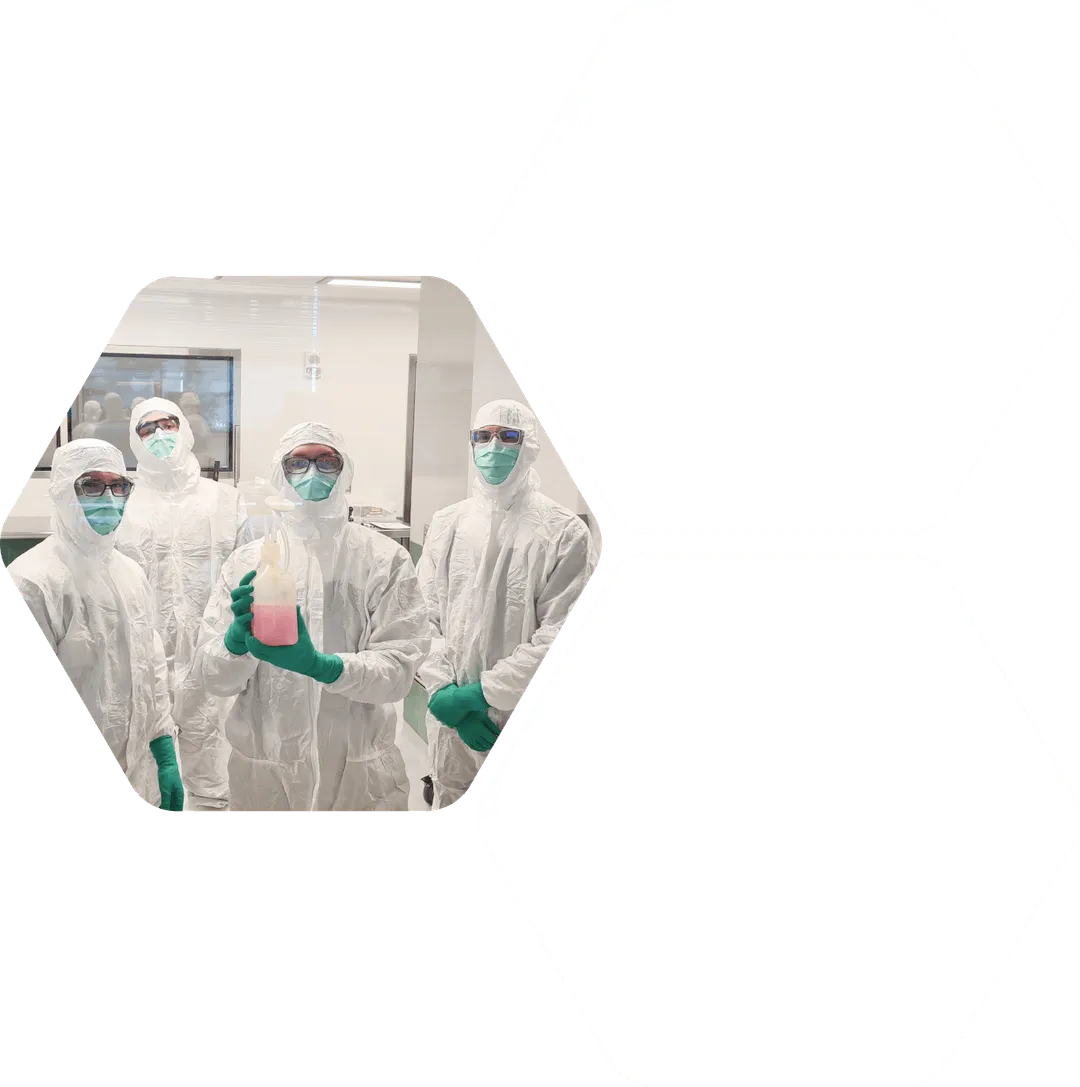
a group of scientists posing for a selfie in the lab

Rare Disease Toolkit

As a manufacturer of gene therapies, Andelyn understands that every vial we produce represents a person and a purpose, and we take that responsibility seriously.

Gene therapy is a nuanced, advanced technology with the potential to cure rare diseases. This toolkit is derived from our experience working with the rare disease community and associated partners. It is intended to serve as a resource for education, finding potential partners, and understanding the pathways for drug manufacturing.

One Family’s Journey from Diagnosis to Gene Replacement Therapy

Elly’s story highlights the path from diagnosis to the administration of a novel gene-replacement therapy in just 14 months, with support from clinicians, researchers, hospitals, universities, and manufacturing organizations.

A family supported through gene replacement therapy

Use the links below to access the resources most relevant to you. Each section is designed to help you quickly find guidance, answers, and next steps.

Finding Trusted Resources

A starting point to building your network and planning for tackling a rare disease diagnosis.

Advocacy Networks, Professional Organizations, & Databases
Resource
Description
PubMed
Database for studies, reviews, and related genes/diseases.
ResearchGate
Search for authors or researchers working on your gene.
NCATS Toolkit for Patient-Focused Therapy Development
Provides online resources to help patient groups with research, registries, and clinical trial readiness.
National Organization for Rare Diseases
Advances research, advocacy, education, and patient assistance. Provides resources for diagnosis, helps patients find specialists, and offers financial assistance for medications and travel.
Rare Diseases Clinical Research Network (RDCRN)
Advances medical research on rare diseases by providing support for clinical studies and facilitating collaboration, study enrollment, and data sharing.
PEDSnet
A network of pediatric health systems that connects to disease registries, longitudinal observational studies, and clinicians and scientists.
Clinical Trials
Track ongoing clinical trials and investigational therapies.
Rare Bootcamp
A multi-day forum to provide parents and other patient advocates seeking to develop rare disease therapies with an opportunity to connect with their peers and to learn from rare disease drug development experts.
NIH Reporter
Allows foundations to see if there are government grants related to their condition and may help connect them to researchers.
American Society of Gene + Cell Therapy (ASGCT)
Brings together scientists, physicians, patient advocates, and other stakeholders focused on genetic and cellular therapies.
EveryLife Foundation for Rare Diseases
Non-profit providing policy and science support, guidance, and connections to advocacy programs.
Genetic and Rare Diseases Information Center
Provides free access to information, diagnosis, and resources.
Coriell Institute for Medical Research
Search to discover if cell lines already exist for a specific disease.
Orphanet
Provides high-quality information on rare diseases and ensures equal access to knowledge for all stakeholders. Maintains the Orphanet rare disease nomenclature (ORPHAcode).
PCORI (Patient-Centered Outcomes Research Institute)
A leader in driving U.S. clinical research to be more patient-centered, which results in evidence that is more relevant and useful.
rtw Foundation
Expert, personalized guidance and operational support to ultra-rare disease foundations at every stage of development.
Global Genes
Provides rare disease advocates with the tools, training, and trust to lead – to activate communities, advance research, and widen the drug development pipeline.
Disease registries/advocacy networks
Find more specific knowledge, build patient cohorts, and connect to researchers. Look for disease nonprofits, NIH/ORDR (Office of Rare Diseases) programs, or academic consortia.
Consulting networks
Networks like RARE Science and CureGRIN connect patient-led groups to experienced biotech mentors.
Disease-specific foundations
These organizations often share or mentor through advisory boards (e.g., Global Genes RARE-X, EveryLife Foundation).
Simons Foundation
A leader in driving U.S. clinical research to be more patient-centered, which results in evidence that is more relevant and useful.

Moving from Research to Approval

This section outlines the key stages in the pathway to manufacturing and regulatory approval of a gene therapy.

Rare Disease Therapy Development Trajectory
Phase
Primary Goal
Experts
Focus
Discovery & Validation
Confirm gene-disease link, create model systems
Scientific PI, molecular biologist, disease expert
Study gene function, model disease in cells or animals
Preclinical Development
Develop therapeutic candidate (e.g., AAV vector, ASO, enzyme replacement)
Translational scientist, pharmacologist, toxicologist
Generate reproducible proof-of-concept data
IND-Enabling / Manufacturing
Produce GMP-grade material, perform toxicology studies
CMC consultant, CDMO, QA/QC specialists
Build a scalable and compliant manufacturing process
Clinical Trials (Phases I–III)
Design and launch first-in-human studies
Clinical trialist, regulatory consultant, project manager
Test in patients for safety, dosing, efficacy
Regulatory Submission & Approval
File IND/CTA and support agency review
Regulatory lead, CMC documentation team
Review safety/efficacy data and ensure data packages meet regulatory standards.
Post-Approval / Long-Term Follow-up
Monitor safety and outcomes
Clinical site coordinator, data scientist, patient registry team
Capture and analyze real-world evidence

Funding the Path from Concept to Clinic

Resources and strategies for funding the pathway from concept to the clinic include support from government and institutional grants, non-profit organizations, and private philanthropic institutions.

Funding Avenues
Resource
Description
NIH SBIR / STTR Programs
Small business innovation grants that fund therapeutic development, including gene and cell therapy.
NIH R13 Grant
Allows for conference support, as many rare disease foundations are trying to put on meetings.
FDA Orphan Products Grants
Funds clinical studies on rare diseases with fewer than 200,000 U.S. patients.
Department of Defense (CDMRP)
Small business innovation grants that fund therapeutic development, including gene and cell therapy.
Cure Rare Disease
Collaborates directly with families to fund and execute customized therapeutic development.
Chan Zuckerberg Initiative (CZI) Rare As One
Funds patient-led organizations building research-ready communities.
EveryLife Foundation for Rare Diseases
Non-profit providing policy and science support, guidance, and connections to advocacy programs.
Orphan Disease Center (UPenn)
Provides rare-disease grant programs and vector development partnerships.
Global Genes RARE Toolkits
Information on patient advocacy, treatment decisions, and fundraising.
EveryLife Foundation: Rare Scholarship
The #RAREis Scholarship Fund enriches the lives of adults living with rare diseases by supporting their educational pursuits.
National Organization for Rare Disorders (NORD) Rare Disease Research Grant Program
Provides seed grants to academic scientists for translational or clinical studies that further the development of potential new diagnostics or treatments of rare diseases.
FDA Orphan Drug Designation and Grants Programs
Programs that provide incentives to promote and accelerate the development of innovative products for the treatment, prevention, and diagnosis of rare diseases.
CZI Rare As One Guidebook
Practical examples of family-led funding strategies
PCORI (Patient-Centered Outcomes Research Institute)
Funds patient-centered comparative clinical effectiveness research (CER) and projects that support CER, such as methodology studies.
SFARI
Funding of Patient Advocacy Group Family Conferences, with a focus on groups in the Simons Searchlight community.