AAV Curator™ Platform

Andelyn's Comprehensive AAV CDMO Capabilities
Optimization-By-Design™
Industrializing Gene Therapy Processes with a Reductionist, Holistic and Systematic Optimization Methodology Approach


Consistency in productivity and quality are evaluated at each stage of development and measured with enabling technologies.
Built on data and configurability, the platform ensures the end manufacturing process is curated to your program's specific needs to optimize yields.
Development of any platform process should account for optimization variables across upstream process, downstream, and fill-and-finish unit operations, materials, and quality control testing panels, as well as quality assurance release parameters.
Our modular approach uses configurable materials and methods optimized for your viral vector development and manufacturing requirements and reinforced with data and analytics.
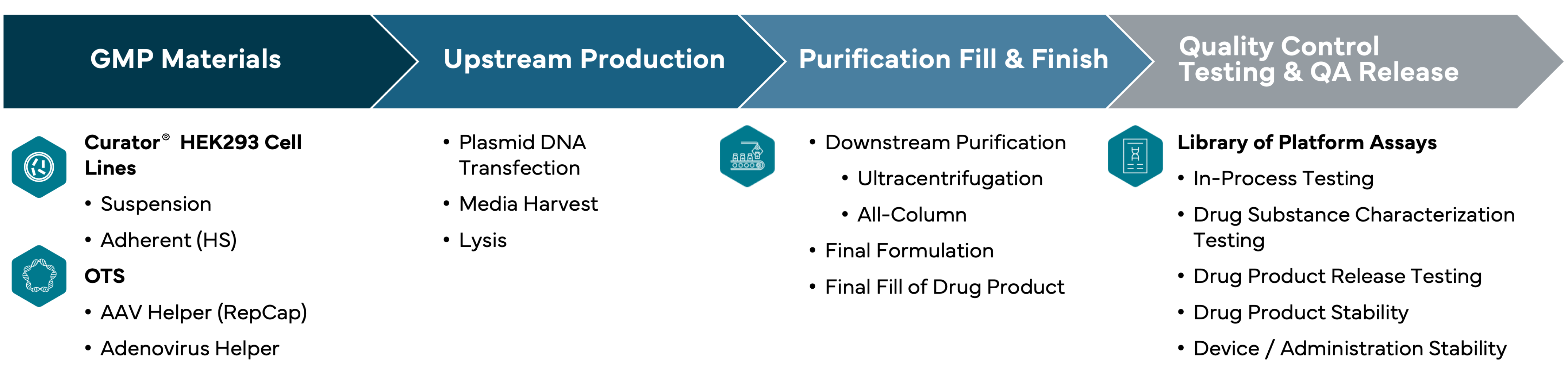

- Adherent process: A low serum system utilizing a fortified calf serum (no FBS) with progressive reduction through the production process.
- Suspension Process: Utilizes chemically defined serum-free media for ultimate flexibility of scale across multiple bioreactor platforms, ensuring success in suspension culture and large-scale AAV vector production.
- Standard Bill of Materials including off-the-shelf (OTS) products that drive reduced lead times and security of supply, full QC testing.
AAV Curator® Cell Line
Clonal HEK293 cell line for high-yield AAV production
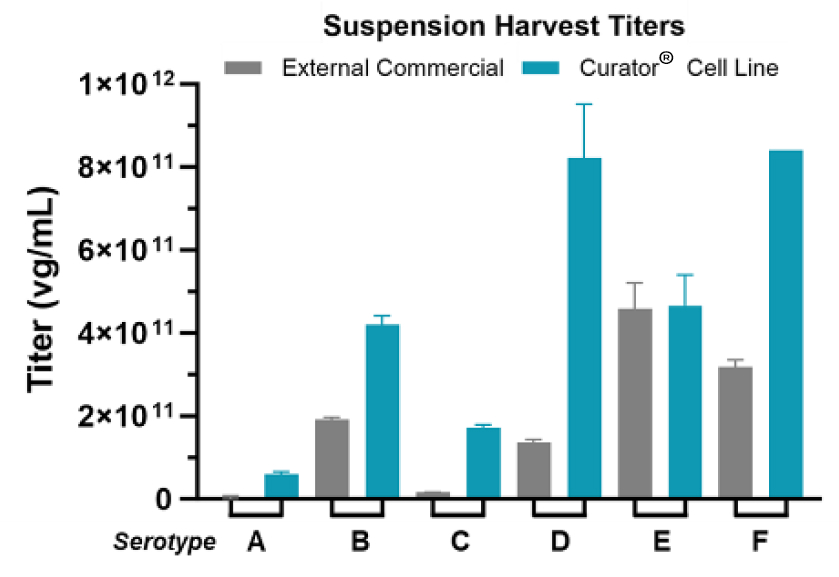
Andelyn's Curator® Cell Line is a clonal HEK293 cell line that improves rAAV titers across multiple serotypes.
- DoE was used to systematically improve rAAV titers for multiple serotypes
- Productivity assessed at harvest by collecting and testing supernatant
- Titers of vg/ml as determined by ddPCR
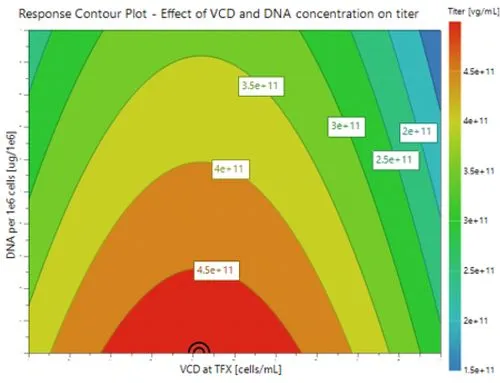
Optimal growth at high Viable Cell Density (VCD) to maximize viral vector production.
- The red region of the response contour plot indicates the design space which results in the highest overall yields of rAAV under the range of conditions investigated.
- Reduced DNA/cell in conjunction with optimal cell density to increase titer maximizes productivity.
Full Program Partnering


Upstream DoEs and downstream optimization can be done in parallel during feasibility and research productions
Benefits of Our Platform Approach

Reduced Spending on Optimization
High Productivity and % Full Capsids driving production costs down
No MCB Generation Costs
No Tech Transfer Costs
No PreClinical/clinical Licensing Fees

Reduced time spent on opTimization
Off the Shelf (OTS) plasmids readily avaIlable
No MCB generatIon time
Supply Chain Already Established
NO TECH TRANSFER/DOCUMENTATION TIME

DMFs filed for Andelyn’s platform
Same equipment in non-GMP & GMP
Same quality systems
Integrated teams in Preclinical & Clinical
Does your program use another vector rather than AAV?
Check out our Tech Transfer capabilities.
Frequently Asked Questions
What is an AAV production platform used for gene therapy?

An AAV production platform is used to design, produce, and characterize AAV vectors that deliver therapeutic genes to target tissues. It supports end-to-end activities, from plasmid preparation and cell culture to purification, analytics, and fill-finish, enabling research, preclinical, clinical and commercial manufacturing.
How does AAV deliver genetic material to cells?
The AAV vector produced by the AAV production platform packages a therapeutic DNA cassette within a protein capsid. After administration, the capsid binds to cell-surface receptors, is internalized, traffics to the nucleus, and releases single-stranded or self-complementary DNA. The DNA then primarily forms an episome. This circular double-stranded DNA structure exists outside the chromosome, enabling transgene expression in target cells.
What are the main components of an AAV production platform?
Key components include cell lines (e.g., HEK293), plasmid systems for rep/cap and helper functions, the therapeutic cassette, upstream production modes (adherent vessels or suspension bioreactors), and downstream purification systems, including ultracentrifugation, chromatography, and filtration. These components are supported and driven by analytics (ddPCR, capsid content, potency) and by GMP-compliant quality systems.
How does an AAV differ from other viral vectors?
Compared with lentiviral or adenoviral systems, an adeno-associated virus (AAV) platform uses non-enveloped AAV with low pathogenicity and primarily episomal persistence, offering tissue-tropic serotypes and a favorable safety profile. It typically has a smaller packaging capacity but provides broad tropism options and established manufacturing playbooks.
What are the advantages of using an AAV production platform for treatment development?
Advantages include predictable manufacturability, scalable adherent or suspension processes, extensive historical data to de-risk development, strong quality attributes (including high full-capsid ratios), and streamlined CMC leveraging existing DMFs, which together can shorten timelines and reduce costs.